
The Joy of Being Delighted In
Delight is a joyful feeling, humans love the feeling of delighting in someone or something. We also love being delighted in. Infact to be delighted in is a foundational layer of connection and love.
Read on to explore the importance of delight, how you can use it in your parenting to nourish your connection and how delight helps form your child’s treasured memories of themselves and you.
Mary Ainsworth was a founding mother on attachment theory and is famous for her concept of ‘mutual delight’ and the potent role it plays in strengthening the bond between parent and child.
The power of a person to beam this delight like the warmth of a sun and watch a child blossom is articulated by John Bowlby, also an attachment theory founder. He worked with Ainsworth in the early years and is credited with saying “What cannot be communicated to the m(o)ther, cannot be communicated to the self” (source unknown).
The ‘other’ referring to the child's other important caregiver, centrally their father or other parent, but any other person in a child's life that cares for them regularly. Acknowledging that the quote speaks to the gendered norms of the time and whilst mothers are still largely the primary caregivers of children there is a generation of doting fathers and LGBTIQ families to be celebrated, who beam this warmth.
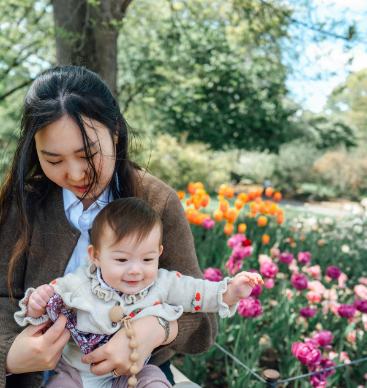
The power of a person to beam this delight like the warmth of a sun and watch a child blossom.
Our experience with our early caregivers and other people in our lives as we grow forms our understanding of our Self. This is proved with research on the formation of autobiographical memories, this understanding of ourselves does not become cohesive until adolescence. A child whose parent extravagantly recalls their early years during their childhood has a more thorough autobiographical recall than their age matched adolescent peers who didn't have this same level of recall.
We see ourselves through our caregiver's eyes.
Barbara Fredrickson sketches out this idea further with her theory that joy builds on joy, where shared moments lead to delight, curiosity, wonder, more joy, more delight, curiosity and so on. She has spent much time on research to prove and define this alchemy between people. This alchemy is the same concept that Dan Siegel terms ‘interpersonal neurobiology.’
That there is a space between you and I, not merely stagnant air, that it is in fact a living space of delightful possibility.
Fredrickson describes in professor speak "My shorthand for this trio is 'positivity resonance'. Within those moments of interpersonal connection that are characterized by this amplifying symphony—of shared positive emotions, biobehavioural synchrony, and mutual care—life-giving positivity resonates between and among people.”
This is the power of mutual delight between two people and if withheld we will go to great lengths to secure this delighting-in attention. We see it in our child's behaviours the whining, big emotions, repeated requests to ‘look at me’, the misplaced contempt from a teen - all ways an immature brain may show us they are seeking connection, our delight in them.
Or perhaps it's the adult who is isolating, giving the silent treatment, feeling disconnected, complaining, lovesick, lonely or simply missing.
If you need more convincing of the absoluteness of this truth, that delight and connection is at the heart of a satisfying life for children and adults alike. This study proved that a prolonged lack of connection is vital to your lifespan - isolation increases your risk of death by any cause.
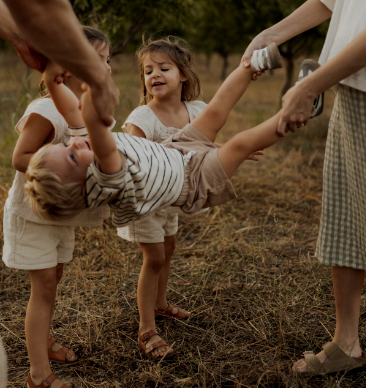
That there is a space between you and I, not merely stagnant air, that it is in fact a living space of delightful possibility.
Delight in me is present around the whole relationship circle in the Circle of Security (CoS) model. The nature of this unconditional positive regard is essential in building security, the feeling of being enough just as you are.
The health of relationships matter, this delighting in makes healthful relationships feel 'like a dance, with visible energy racing back and forth between the partners". Energy of non-performative delight is uplifting it feels wonderful. The author of this quote, Colette Dowling, goes on to dramatically example the converse impact of unhealthy relationships as “the slow, dark dance of death”.
Sharing in these joyful feelings- delight, curiosity, wonder and awe for example builds acceptance of these emotions as well as a child's positive emotional diversity. It is the same for the typically ‘negative’ feelings when a child comes in for comfort - anger, fear, shame, guilt, sadness, that we as adults can accept and welcome them just like the joyful feelings creates a healthy relationship with these emotions. I delight in you coming to me with whatever it is you may bring, that is unconditional.

I delight in you coming to me with whatever it is you may bring, that is unconditional.
There is a religious concept of the ‘discipline of delight’ whereby you strictly cultivate delight in everyday life. On very first glance (from my parenting lens) I misinterpreted this as a delight in discipline. Which got me thinking in CoS language - discipline is to teach, there is possibility for us to delight in teaching our children, to delight in discipline. The lessons don't need to be gruelling, controlling and harsh. They can be nurturing, there can be curiosity and humour in our children's foibles (for us internally to enjoy watching them experiment but to laugh at them would be undermining). Delighting-in our child's learning and supporting them in thoughtful discipline upholds the statement ‘kids do well when they can'.
Infact the authoritarian way of relating to children and in hierarchical systems such as the workplace is really at odds with this delighting-in. The control creates a scenario where affection and the relationship is conditional upon you behaving, looking or feeling a certain way.
Arguably this control erodes nonperformative delight, killing the spontaneous joyful energy between two people.
As adults we often fall into the trap of taking our child's big emotions (I’m here on the planet, experiencing life for the first time-ness) personally. If this is you, you are certainly not alone.
If you wonder about emotionally mature people and how that shows up Lindsay Gibson has done a lot of work on this. Adult Children of Emotionally Immature Parents is readily available for free in pdf online as well as on Libby.
As Lindsay Gibson describes it, people who are emotionally mature tend to show three big attributes in their maturity, the more of these attributes, more mature:
Realistic and Reliable - work with reality, feel and think at the same time, consistent and don't take everything personally.
Respectful and Reciprocal - respect boundaries, give back, flexible, even tempered, able to compromise, be influenced, truthful and apologise.
Responsive - their empathy makes you feel safe, seen, understood, they comfort and receive comfort, reflective, try to change, laugh, playful and enjoyable to be around.
For those of you raised by emotionally immature parents you can actively cultivate emotional maturity. There is significant crossover with insecure attachment styles (~40% of the population), you can ‘learn’ how to become secure through your own inner work. Fostering relationship with people who delight in you, who you are, is also a helpful step towards that.
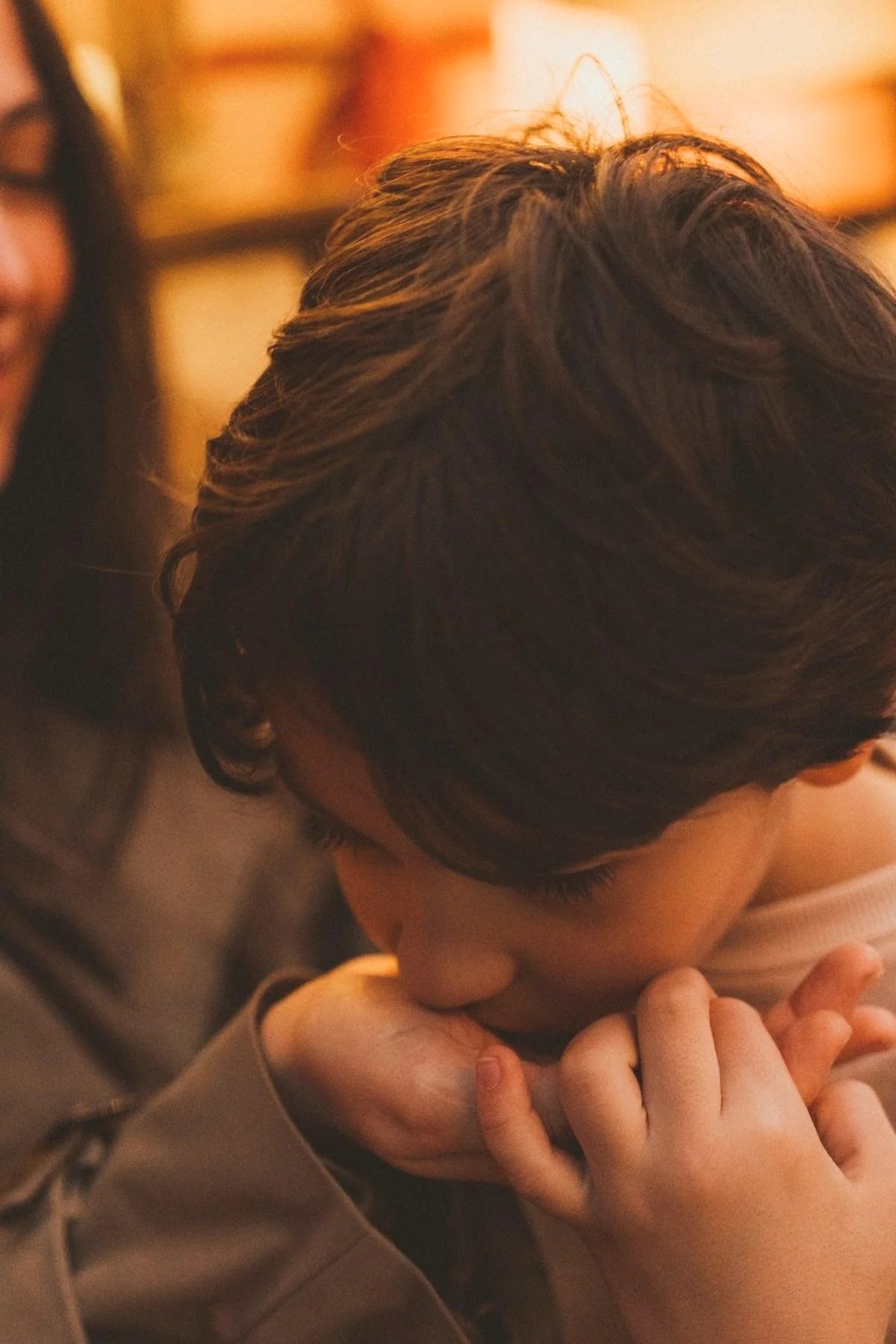
To rest in someone's positive regard, to be delighted in, is truly a gift, one you can give to others as well as yourself.
Practical micro moments that can help you to orient towards closeness in your day, to increase synchrony and foster this sense of being delighted in:
Verbal noticing:
“I saw how kind you were just then”
“I love how generous you are”
“You kept trying there and I saw how hard that was for you”
“Your smile really lights up my day”
“I can see how sad that made you”
“You really care about ‘x’”
“You got so angry and you could tell me about it I really appreciate it”
“Thank you for telling me that”
“I love spending time with you”
“I love being your mum/dad”
“I'm so glad I we get to do this together”
“I'm here if you need me”
“I can see it's hard for you but you're doing it”
“You're so close to being able to do that, that's all your hard work”
Hearing, keeping the attention on the other:
Simple listening closely.
Reflective listening.
Tiny words or sentences to show you heard and understood.
“So you really did x hey”
“I can imagine!’”
Keeping little details remembered to follow up with later (especially so for teens), on stories or recollection
“Yes I remember when you said x the other day I can see why you might have happened”
Body language:
A quick hug when reconnecting (after sleep, time away from each other, something difficult)
A longer hug in the context of relational warmth of at least 20 seconds can reduce heart rate and blood pressure (especially for midlife women)
Holding a gaze long enough to feel acknowledged with warm eyes
Stopping what you're doing briefly to truly listen and hear what your child is truly asking or doing
Be the last one to break a hug or a handhold
Simply observing your child with a soft smile, gentle eyes
High fives to celebrate
Gently turning in when sitting together
A back rub
Roughhousing
Deep pressure hugs and touch for sensory seekers
A note on context - in rushed terse moments a hug may feel stressful, unwanted, or smiley eyes may feel mocking. The context, and temperature check, of the tone of the situation is essential. If this is new to you and you're stuck in repeating patterns ask yourself what sensory experience it is that your child or loved one enjoys, how can you start with the softest approach (for example, increasing acknowledgement with warm eyes and a soft smile).
“Our past moments of love and connection make us infinitely wiser.”
- Barbara Fredrickson
To delight-in is an essential part of human nature. The quality of connections within our lives impact our relationship, mental and physical health and wellbeing. To delight with and unconditionally welcome your child's and loved one's ‘positive’ and ‘negative’ experiences is to be a place to rest in, in the big and everyday moments. These delight-in moments show your love, they strengthen and enrich your connection in an upward cycle.